By Robin Vermeulen, Associate Director and Lennert Jacobs, AI strategist
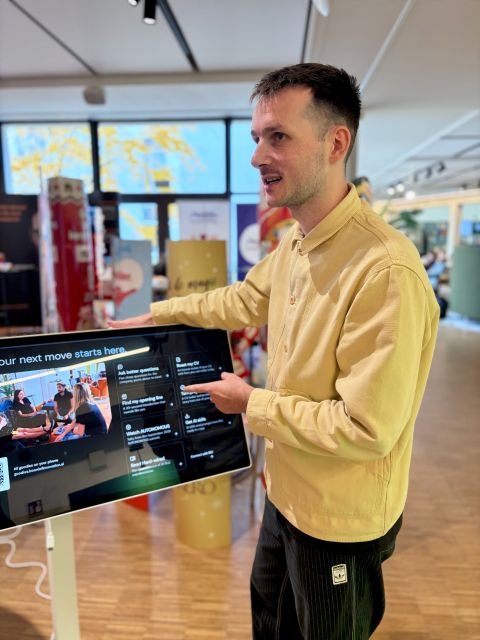
Recently, at a career fair, our booth was a screen instead of a stack of flyers. Students scanned a QR code and took free tools for their next career conversation, from a brutally honest CV review to five sharp questions for the company they wanted to meet. We built the screen and the tools ourselves, with AI in 2 hours. We did it because we believe junior roles are worth investing in right now, and we wanted to back that view with something they would actually use.
Is AI taking junior jobs?
AI is taking junior tasks, and many companies are hiring fewer juniors as a result. In the UK, Big Four firms have cut graduate intakes, some by close to a third (Consulting Point, June 2025, based on The Telegraph). Research from the Stanford Digital Economy Lab shows that employment for 22 to 25-year-olds in the most AI-exposed jobs has fallen behind their peers in less exposed jobs, mostly because companies hire fewer of them.
Where does junior work go when juniors are cut?
It moves up to senior people. Some junior tasks get automated, and the rest drifts upward until the most experienced people in the room spend their week on first drafts and on checking AI output.
That checking is not cheap. In a METR trial, experienced developers expected AI to make them 24% faster, but they turned out 19% slower, partly because of time spent prompting, waiting on and reviewing AI output (METR, 2025). Jochen Kokemueller of Bosch, who cited the trial at our AUTONOMOUS Summit in September 2026, called junior roles the most expensive thing a company can cut.
Which tasks should juniors own now?
Juniors should own tasks that AI makes doable with less experience, as long as the result is easy to check. A working prototype is the clearest example: it runs or it doesn’t, so a trainee with the right tools can now put one in front of a client within a week. First business cases and opportunity sizing are moving down the same way.
New tasks are appearing too: checking AI output, setting up and steering agents, running live tests. These make good first jobs, as long as a senior owns the outcome. A recommendation that rests on thin evidence stays senior for now, because only someone who knows what thin evidence looks like can check it.
How do juniors build judgment if AI writes the first draft?
They build it by drafting first and using AI to raise the bar afterwards. In a Harvard and BCG field experiment with 758 consultants, those who used AI on a task beyond its capabilities were 19 percentage points less likely to get the answer right than those who worked without it (Dell’Acqua et al., 2023). Reviewing polished AI output asks a junior to judge work before they have learned what good looks like.
At BOI, juniors form a view, test it against AI and bring it to a senior, who challenges it at the key moments. The senior colleague asks one question in every review: did your view survive contact with the AI’s answer, or did it slowly turn into it? Until a junior’s checks have a track record, they count as training, so the client doesn’t rely on them and doesn’t pay for the practice.
What did we give students at the job fair?
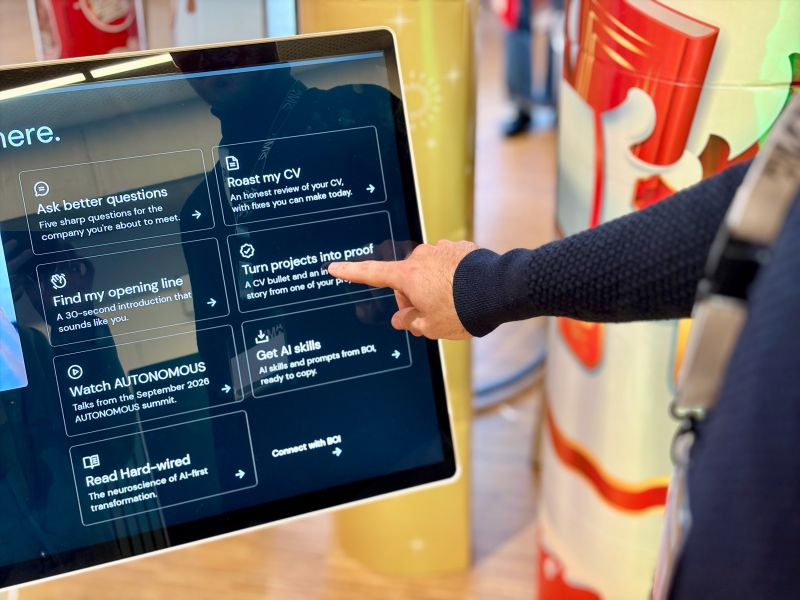
We gave them tools for the tasks that are moving, built on the same rule: you bring the first version, and AI helps you sharpen it.
- Ask better questions: five sharp questions for the company you’re about to meet.
- Roast my CV: an honest review of your CV, with fixes you can make today.
- Find my opening line: a 30-second introduction that sounds like you.
- Turn projects into proof: a CV bullet and an interview story from one of your projects.
- Watch AUTONOMOUS: talks from our September 2026 AUTONOMOUS Summit.
- Get AI skills: the prompts and skills BOI uses, ready to try.
- Read Hard-Wired: our playbook on the neuroscience of AI-first transformation.
They’re free at goodies.boardofinnovation.ai, and you don’t need an account.
What should leaders decide about junior roles?
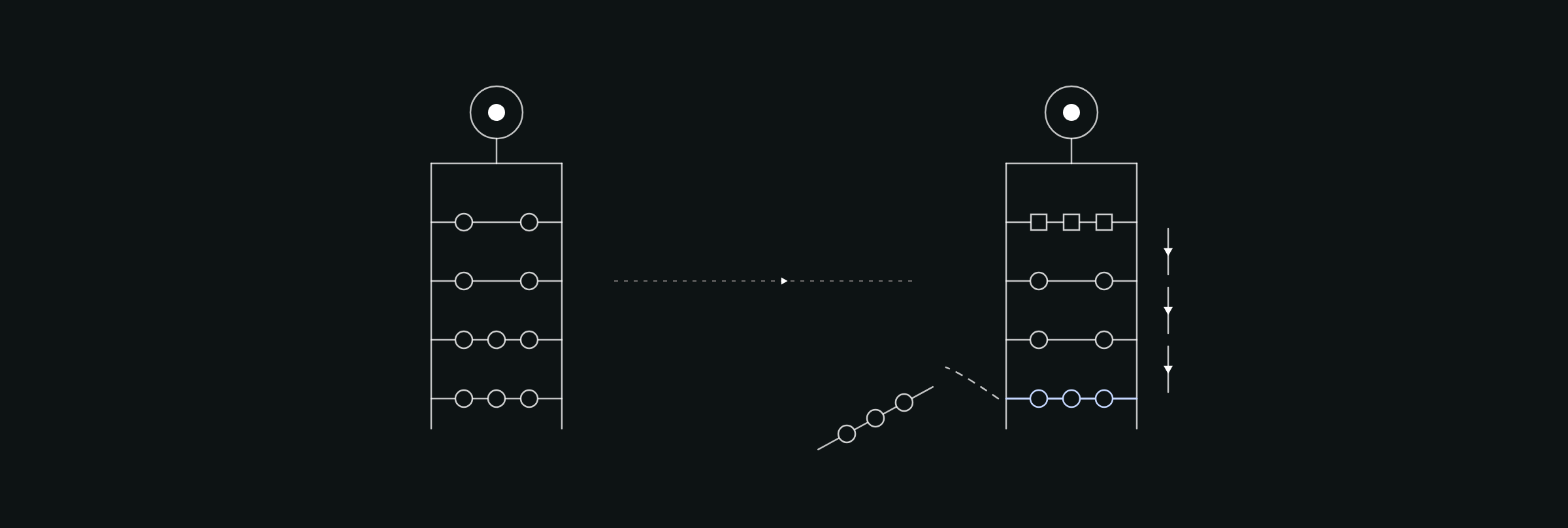
What happens to juniors is a design decision, and it works best when it’s made on purpose. Start from the outcome the team exists for. Then go through every task beneath it and decide whether to retire it, move it down to someone less experienced, or create it. Agents get clearly limited tasks and earn more autonomy over time, while people stay accountable for all of it, with juniors as the first layer of people above the agents.
This is how we approach work redesign with clients, and how we’re rebuilding our own way of working. Kokemueller left the AUTONOMOUS audience with a question worth putting to every leadership team: “In ten years, who in your organization will still be qualified to look at what the machine produced and say, I’ve checked this and I’ll answer for it?”
To see how we think about AI-first change, read Hard-Wired.
Sources
- Consulting Point (24 June 2025). Tech vs talent: Big Four cutting graduate jobs in favour of AI is “a misstep”, expert warns. Based on The Telegraph.
- Brynjolfsson, E., Chandar, B. and Chen, R. (2025, revised 12 August 2026). Canaries in the Coal Mine? Six Facts about the Recent Employment Effects of Artificial Intelligence. Stanford Digital Economy Lab.
- Becker, J., Rush, N., Barnes, E. and Rein, D. (2025). Measuring the Impact of Early-2025 AI on Experienced Open-Source Developer Productivity. METR.
- Dell’Acqua, F., McFowland III, E., Mollick, E., et al. (2023). Navigating the Jagged Technological Frontier. Harvard Business School Working Paper 24-013.
- Kokemueller, J. (Bosch) (2026). Thinking Is Free. Trusting Is Not. AUTONOMOUS Summit 2026, session recording.