Used is worth more than new
Scaling remanufacturing with Vanderlande to make logistics more reliable, cost-effective and carbon-neutral.
GTM strategy
B2B customer research
Logistics
Scaling remanufacturing
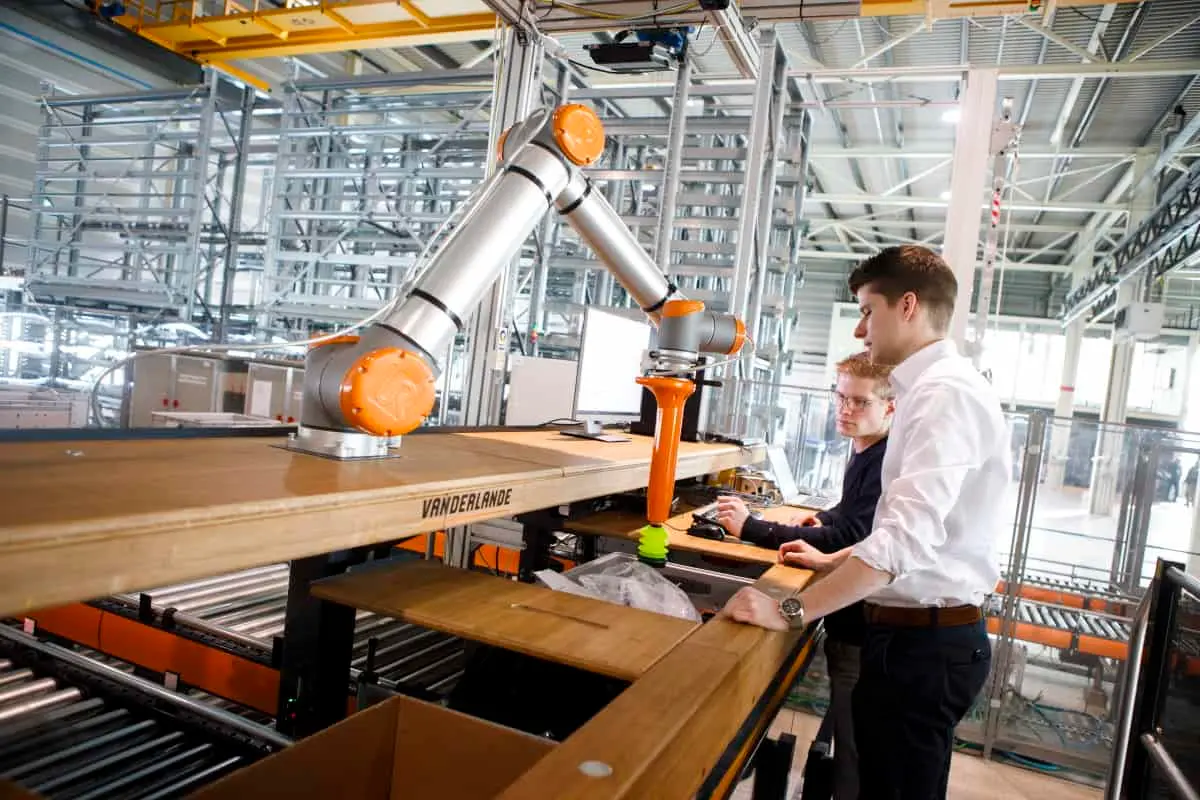
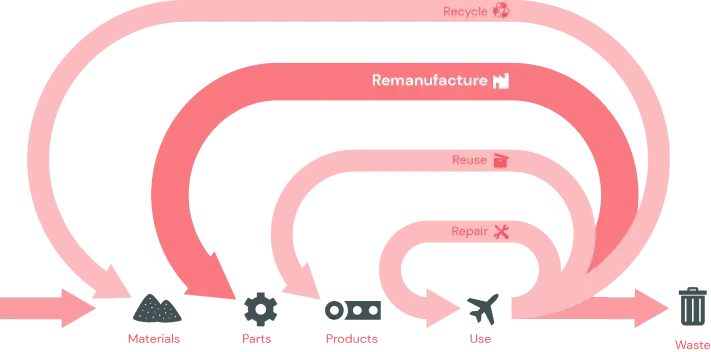
Vanderlande sought to remanufacture critical, high-value components of their automated logistics systems to ensure a steady stream of spare parts in an environmentally sustainable, profitable, and reliable way. They already knew this was technically possible, but were unsure whether their customers would be interested, what the financial upside would be, and how to launch and scale the business.
By the time we started working with them on this, the company had already done enough of the technical analysis to confirm that this remanufacturing could be done at small scale; the remaining questions were whether it could be scaled in ways that made business sense for Vanderlande and its B2B customers worldwide.
Building a solid business case
We helped Vanderlande define a path forward that aligned ecosystem stakeholders while delivering clear bottom-line impact.
We identified key customer segments and conducted deep interviews focused on real operations, journeys, and friction points. A common assumption was that sustainable options like remanufactured parts must be cheaper to gain adoption. Customers told us the opposite: if it works, is environmentally friendly, and comes from a trusted OEM, they are willing to pay full price—or more. This aligned with customers such as Schiphol Airport, which have explicit CO₂-reduction targets.
A stronger business driver emerged around operational downtime. Remanufacturing reduces reliance on fragile global supply chains, enabling faster lead times for critical parts. This lowers downtime, inventory, and repair costs while reducing supply chain risk. In some heavy-industry contexts, OEM-remanufactured parts even outperform new ones, improving long-term reliability and lowering operating costs.
Learning that their customers would pay full price for OEM-remanufactured parts was an “aha!” moment for Vanderlande. The company also realized that remanufacturing might become even more important for their business, as customers might make it a requirement.
Working with Vanderlande’s innovation and sustainability teams, we used the BOI Business Model Kit to explore scalable remanufacturing models. We assessed three scenarios and identified a regional hub model as the clear winner.
When presented with the projected cost savings, Vanderlande’s Executive Director of Innovation immediately escalated the opportunity to the CEO. Soon after, the company committed to piloting a regional hub in Veghel, leveraging existing facilities and engineers. The pilot is now being set up with upfront pricing and letters of intent from local customers—an unusually fast move for sustainable innovation, driven by a compelling business case.
A global pilot
If the Veghel pilot is successful, the regional remanufacturing hub approach could go worldwide within five years. And the biggest change might be on product design, as Vanderlande starts to redesign the components of their systems so that they’re more easily remanufacturable, including through greater use of standardized modules as they design solutions for particular purposes and customers.
3,573
tons of CO2 reduced at scale per year
+50%
higher productivity per employee
30x
faster lead time for spare parts (4 months to 4 days)
What does all this mean for airports, parcel delivery services, e-commerce companies and grocery retailers? We think they’ll have more flexibility in how they configure and reconfigure their automated logistics – for example, more flexibility to accommodate new setups in various warehouses, because their automated systems are more like assembled puzzle pieces rather than systems tailored to the original setup in one particular warehouse. And with that flexibility, they might also be able to accommodate new types of products – differently shaped or from different kinds of suppliers. That could allow all of us to have access to a broader spectrum of goods.
This is only the beginning of the journey, but we think the eventual benefit for the end consumer is that high-end automated logistics systems will be deployed in more places at a lower cost, making it possible to distribute more things and more types of things more quickly and with a lower carbon footprint.
Get in touch
Want to learn more? Let’s talk